
Part temperature
The overlooked critical parameter in Thermal Spray
The quest for consistency in thermal spray
In the thermal spray industry, coating suppliers increasingly monitor and control parameters such as powder feed rate, gas flows, traverse speed, turntable speed, electric power... The goal is clear: ensure that once a process is validated, using test pieces or sacrificial components, it remains consistent over time to deliver the same product quality to customers for years.
Yet, one critical parameter is often overlooked: the temperature of the part during spraying. While some industries, particularly aerospace, specify strict temperature ranges for substrates during coating, this practice is not universally adopted. It’s common to see thermal spray videos online where parts are coated without any cooling, highlighting a significant gap in process control.
Why part cooling matters
Common misconceptions
Some coating shops only cool parts to make them easier to handle after coating. Others consider that if a component will operate at nearly 1000°C in a gas turbine, heating the base metal to several hundreds °C during spraying has no impact. This is a dangerous assumption.
Scientific evidences
Numerous studies demonstrate that the base metal temperature during coating significantly affects the final properties of the coating, including:
- Microstructure,
- Adhesion,
- Residual stress,
- Hardness,
- Friction and abrasion behaviour,
- Deposition efficiency...
These characteristics are precisely what customers are looking for when specifying a coating. Ignoring part temperature during coating, or failing to control it consistently, undermines the promise of delivering a reliable, high-quality product over time.
The complexity of optimal temperature control
The challenge
There is no universal rule for the ideal substrate temperature. The optimal range depends on:
- Substrate and coating materials,
- Spray process used,
- Part geometry,
- Service conditions...
Determining the optimal temperature range is complex and often requires feedback from end-users on in-service coating performance. However, the absence of perfect data should not justify ignoring temperature control entirely.
In some cases, the color of the coating can indicate the level of cooling applied during the thermal spray process. However, these color variations are often subtle and difficult to detect on a single part. Comparing multiple parts side by side typically makes the differences more noticeable.
Best practices for part temperature management
Controlling substrate temperature is critical to achieving consistent, high-performance thermal spray coatings. Below, we outline some methods to help you maintain optimal temperature conditions, improve coating quality, and ensure long-term reliability.
1 - Always apply some cooling
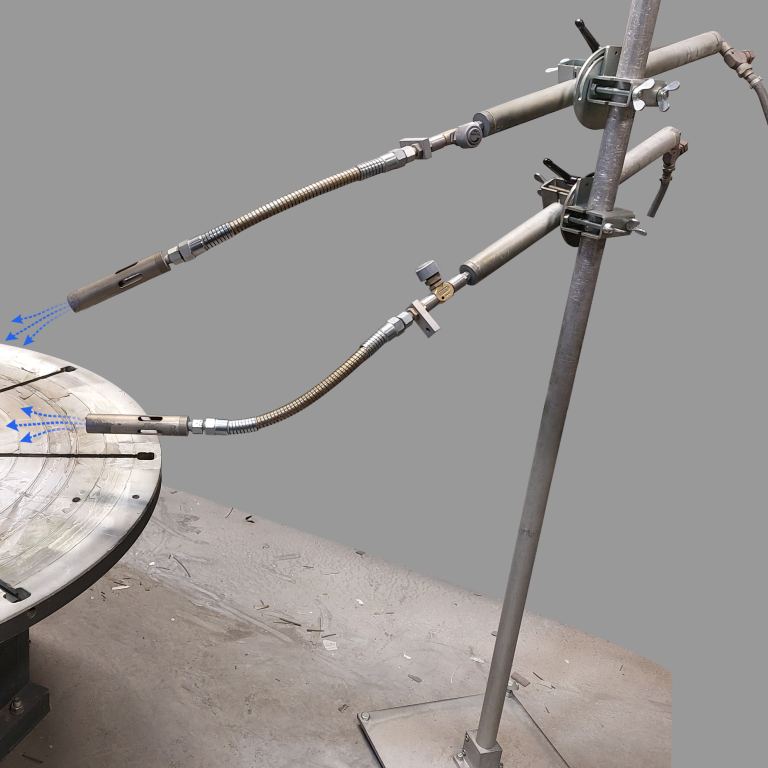
Whenever practical, set some cooling directed at the part during the spray process. Implementing a basic cooling method minimises extreme temperatures and reduces coating discrepancies between operators.
When no cooling is used, if an operator apply all required passes in a single run, the part’s base metal temperature will rise significantly, often reaching several hundreds °C. While another operator who applies the coating in stages (e.g., 5 passes followed by a break, then another 5 passes before another break) will likely keep the part’s temperature significantly lower.
Cooling options range from basic compressed air (ensure it is dry and clean to avoid to contaminate the coating), to CO₂ cooling for demanding applications.
2 - Use appropriate air nozzles
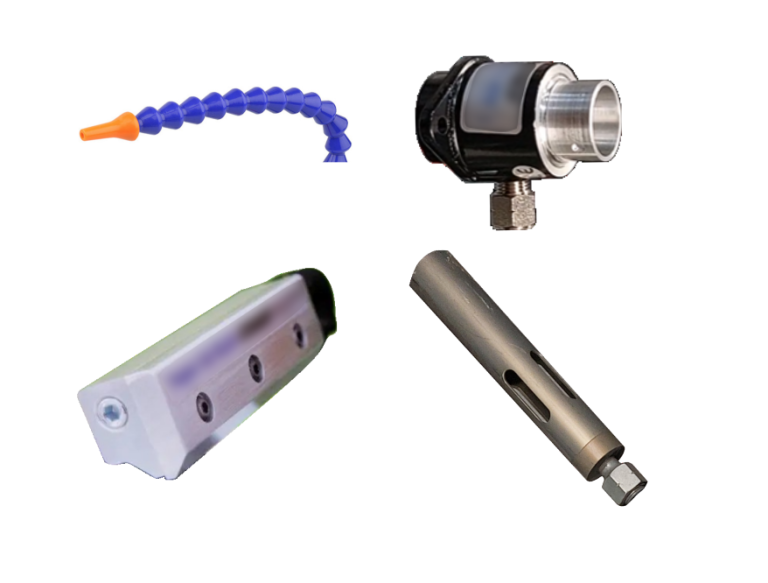
Cooling nozzles supplied by your spray equipment manufacturer may not be optimal for your parts. Explore various air amplifiers and specialised nozzles available across industries to optimise cooling efficiency depending on your applications and to reduce compressed air consumption.
3 - Program cooling breaks
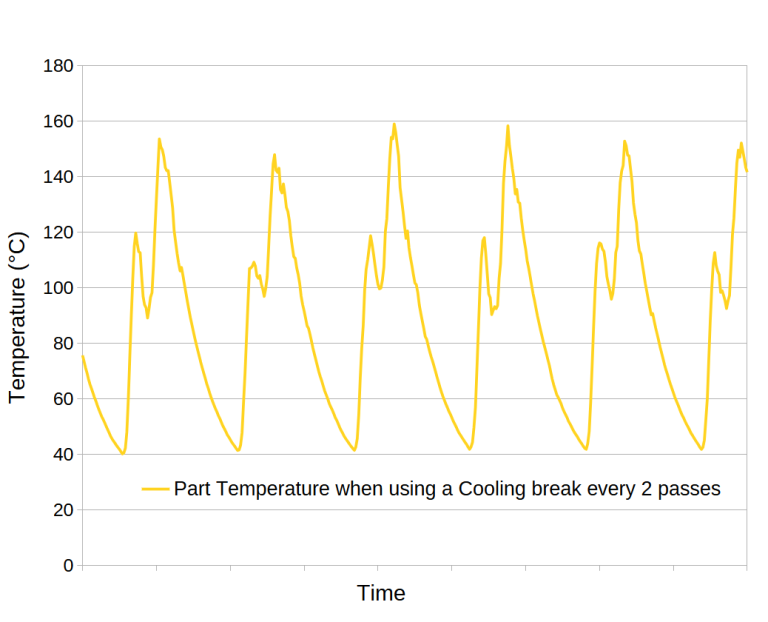
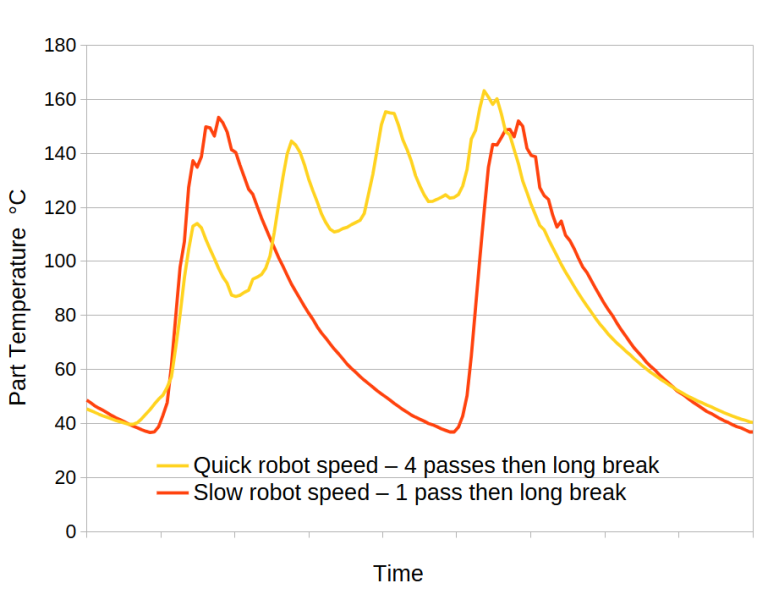
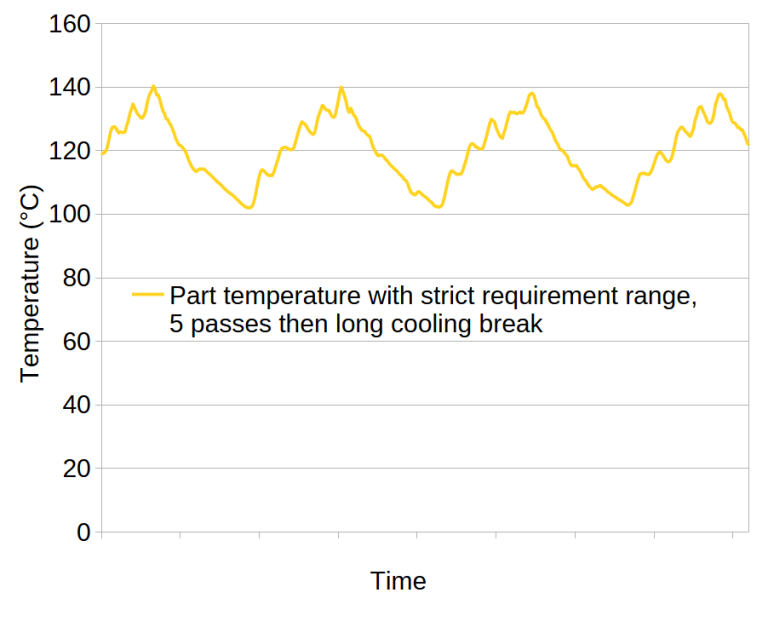
For greater control, program your equipment, often a 6-axis robot, to include periodic breaks. For example, after every 5 passes, the robot can move to a standby position, pause the powder feed (to limit cost), and wait for a set duration before the next pass. These breaks help maintain the part temperature within a defined range and prevent it from exceeding a maximum threshold. The frequency and duration of these breaks should be determined through testing and temperature measurements.
For small parts, robot programming offers an additional advantage: robots can activate or deactivate the powder feed and part coolers as needed. In some cases, cooling a small spray area with air venturis risks disturbing the powder in the flame (spray plume). Robot programming allows you to activate specific coolers only when the gun is outside a critical area, ensuring the part is cooled without affecting the coating plume.
4 - Optimise program speed and spray parameters
Adjusting traverse speed, spray parameters, and feed rate can minimise the heat input per pass. For example, faster traverse speeds reduce the maximum temperature achieved per pass but will require more passes. When combined with intermediate cooling breaks, this approach helps keep the part temperature within an acceptable range.
5 - Use real-time temperature monitoring
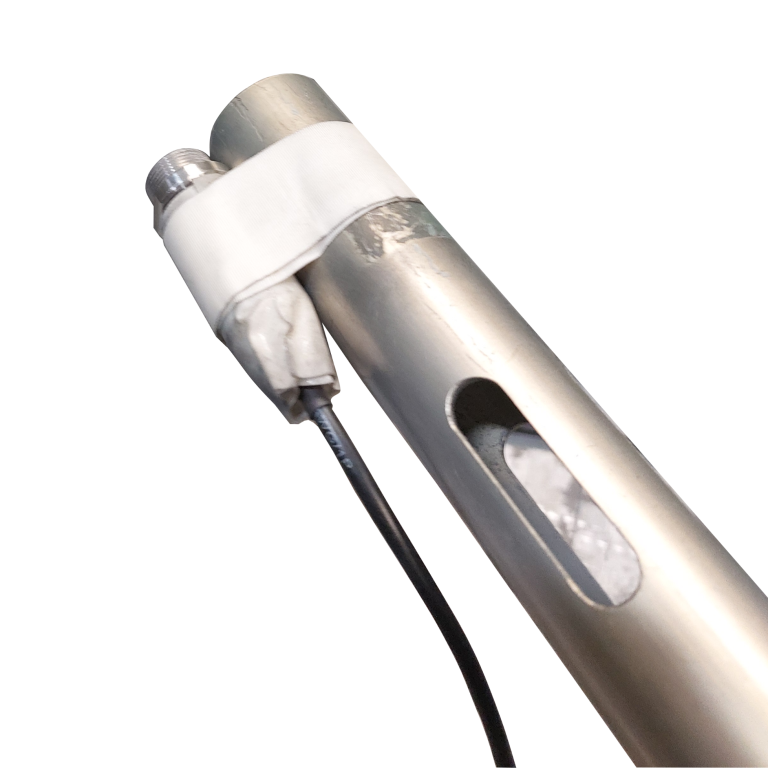
For the highest level of precision, use real-time temperature measurement on each part during spraying. Clearly define the measurement location and method, as these choices can significantly impact the readings. IR temperature sensor can be used for example. The temperature data can be integrated within the robot controller, allowing the robot to automatically pause spraying when the temperature exceeds a set limit and then to resume spraying once the part cools to a specified value.
6 - Consider pre-heating
Some applications require a minimum substrate temperature for optimal adhesion or microstructure. In these cases, it is critical to avoid both overheating and overcooling the base metal, for example by returning it to room temperature before applying another pass.
Preheating is often achieved by applying a few passes with the powder feed off. Maintaining a controlled process cycle is essential to ensure the temperature remains consistent throughout the process.
Facing challenges in managing part temperature?
EPS-TS Ltd can support you in every aspect of temperature control. Feel free to contact us for expert advice and solutions tailored to your needs.